
Resurrection
Bi Gan's latest work is best-of-the-decade material

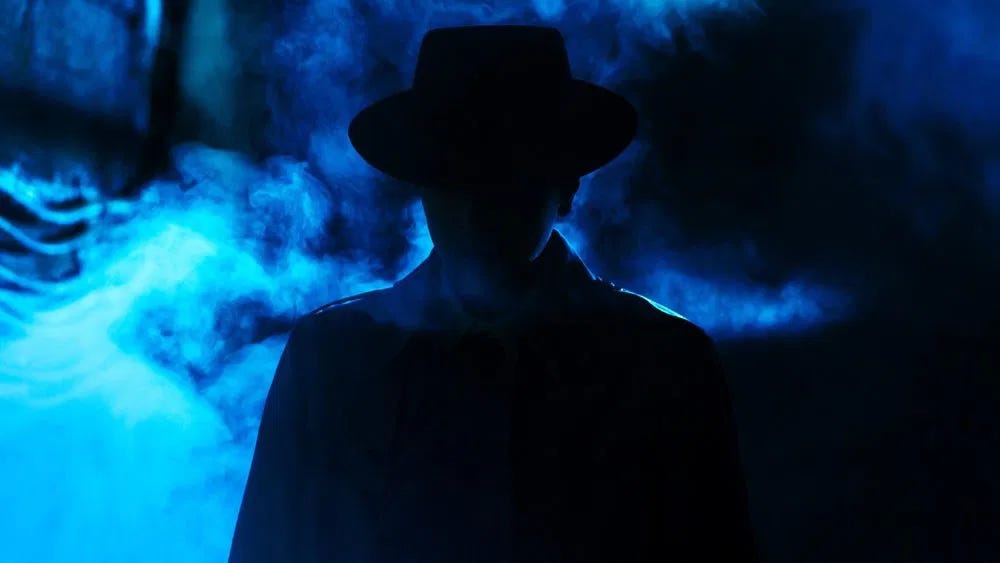
Magnolia is maybe the closest filmic comparison I can find for Resurrection. Not because Bi Gan’s latest film is a sprawling melodrama with frogs raining down from the sky, but because it is a massive step for a young auteur while brandishing rather intense and layered ideas about humanity. Bi Gan, in his current iteration, has much more control over the connective tissue between form and themes than a young Paul Thomas Anderson once did (who has since gone on to build his own visual language.) Resurrection is so felt and mannered that one cannot help but consider that this is one of the great works of the decade.
Resurrection opens by introducing you to the idea of a deliriant, someone who still dreams in a world that has forbidden it. The series of dreams that the Deliriant (played by Jackson Yae) that the film follows are disconnected as far as story or character work. However, they do explore different aspects of desire as he hops through a century of film history. That desire comes in vastly different forms. In the opening silent era, that comes out as opium addiction. The Deliriant is forced out of his drug fueled haze by Miss Shu (played by Shu Qi) who is hunting down the monster. Bi Gan explores this cinematic time period through wonderfully exclamatory title cards and production design that is even more tactile than it initially appears as incredibly large hands move the set around while the actors perform. After Miss Shu brings the Deliriant back to her work and living space, she begins this death ritual with it, examining the roll of film that is stuck within a cavity in its back before laying it down to rest in a field. The pulling back of the ruby red curtain to reveal the greenery is the Dorothy steps into Technicolor moment in an openly reflexive moment for the Deliriant as he enters terminal lucidity.
The first three dream sequences feel like they are very nakedly paired together. They are visually stripped down to simple images as the exploration of a craven need for nostalgia and telling ourselves lies to create a “better” environment for ourselves takes center stage. Desire during the detective story is quite close to the “fuck around and find out” attitude of a lot of noirs and particularly neo-noirs like Chinatown. Concrete answers will not be found here, and Bi Gan is making that very apparent as a knife slides into the crevices of the Deliriant’s back only for the detective who put the weapon there to burst into flames. There is little catharsis to be found in work, no matter how violent or engaging it is for the worker bee.
In the second dream, Bi Gan very acutely revisits a thematic interest from Kaili Blues, his directorial debut: how our relatives physically appear to us and how that can be altered through moving forward or backward in time. With that comes a desperation to rekindle that relationship even if it is not the time or place. In maybe the most on the nose moment of Bi Gan’s filmography, and one that feels directly out of Guillermo del Toro’s brand of tapered down fairytales, the Spirit of Bitterness appears to the Deliriant as his father. The sequence still retains its power purely through its mean spirited edge. There is a grittiness and unease with how characters interact with each other in the temple, as the film explores the boundaries between death and life and how magic can move our understanding across that spectrum.
The third dream correlates magic with filmmaking and the power that comes with that skillset. The Deliriant, using his card tricks for material gains puts his young coworker (played by Guo Mucheng) in a rather awkward position to lie to a client who simply wants to be able to read a burnt up letter that his deceased daughter wrote for him. The insatiable pining to reconnect with our past and those who are no longer here is an understandable hunger to have in one’s belly for the client, and it is the job of the artist to create that through their art.
Resurrection has an emotional core that is visible almost purely through appreciating Bi Gan’s formalism, which makes it all the more impressive. It is not a very personal weepy or a piece of sentimental autofiction. Bi Gan obviously has personal stakes in cinema having a significant lifespan, but the tales of dreams and time travel that he tells feel disconnected from any personal experience of the Chinese director outside of simply Kaili being his hometown. Through the slow but constant escalation of filmmaking techniques, most notably apparent in the aspect ratio which gets more expansive as the film progresses, Resurrection becomes an overwhelming experience, dialing in on a series of flourishes and moments that get what is so powerful about cinema.

Bi Gan has become infamous for these elaborate oners that break all three of his films out of a seemingly intentional monotony. In Kaili Blues, he finds this incredible moment where the camera leaves our protagonist to go down a different alleyway during his tracking shot. It is this jaw dropping choice that feels out of place in any narrative film. The camera in 99% of films (and that is realistically on the low end) is a tool that lacks free will, used to convey a third person perspective. In this moment, the audience must reckon with the fact that the camera has cognition of its own and because of that could come to the conclusion that the camera is not in the presumed third person perspective. That is a germ of a magnificent idea that Bi Gan does not manage to fully reckon with in that film, but 10 years later develops it into a moment that is even headier. Throughout the stellar tracking shot in this film, the camera, once again presenting itself as being in the presumed third person perspective, actively shifts into the perspective of Mr. Luo (played by Huang Jue), a gangster and club owner, as he walks through town to get to his karaoke bar. Once he begins to sing, the camera moves out of his perspective – while still being part of the same shot. Bi Gan constantly brings attention to these formal swings in similar ways to RaMell Ross. Both of these filmmakers come from vastly different backgrounds but share similar cinematic reference points: Malick and Tarkovsky with bullet points next to their names. Both want the audience to consider features of cinema that they take for granted. Why is a cut from one image to the next considered a movement that must move chronologically forward in time? Why does in-frame time need to move at the same pace that a person experiences time within reality? Bi Gan suggests that time can move in whatever direction and at whatever pace he so desires whether that be out of the frame or in the frame through an all-night time lapse.
This moment shares the understanding that we have barely begun to explore the boundaries of cinema. The camera is so much more than a tool when filmmakers are willing to push it past that understanding. The extended tracking shot does not hold the power that it does without the context of the film preceding it. Expressing wants and desires through much more restrained formal choices and more subconscious desires allows for it to hit like a sledge hammer encompassing a millennia of cinematic history as we watch what is narratively a pulpy vampire romance. That makes the point of Resurrection even more impressive. Cinema does not exist strictly to deliver plot. If it did, it would be a Wikipedia page. Rather it is about how form can elicit legitimate ideas and feelings out of something that should read as kitschy and silly on paper.
“I may not know you will be in the future.
But I do know we were all once a corpse in history.
Right now, you are outside the silver screen.
Farewell!
Even though this land is filled with suffering!
Farewell!
Even though this world has already fallen apart!”
In the epilogue, a glowing audience enters a half-melted wax cathedral which is shown to be the dilapidated cinema from the beginning of the film. In this moment, Bi Gan reverts the attention of the film directly onto the audience. Even while watching Resurrection in my living room, this felt like a communal experience. A desperate and dying industry on its last legs has future forms to take, and every single possible form includes a shining audience gleeful to appreciate such artistic expression. A series of increasingly strange decisions with a camera, by an actor, or in an editing bay can bring people together and in the case of Resurrection, do so while exploring the boundaries and self imposed limitations of movie making. Perhaps cinema can desire a little bit more out of itself.
Thank you to the team at Janus Films for very kindly sharing a screener of the film with me.